
I didn’t think I would have anything more to write about GOV.UK on the High Street.
Then I wrote about A-level results day and why the interesting future for the GOV.UK app isn’t putting web search inside something you have to download but joining up what government knows and can do around the person whose results have just arrived.
Though as I thought about it, I wasn’t actually sure I wanted the result itself to arrive through the app. There’s something very tactile about going back into school and something very communal about receiving the results, and the mixture of support, solidarity and celebration that follows.
The administrative task is getting a result. The experience is something else.
I called the envelopes a feature, not a bug. Jeni Tennison picked up on that and started a conversation on Bluesky about ‘ritual and occasion-making’ in public services, and what we can lose. Seeing teenagers with envelopes made her think about community, peer support and shared experience. Other people in the thread talked about PhD submissions, health results, weddings, passports and driving licences. Peter Wells observed that apps have a tendency to smoosh profoundly different moments into the same notification-shaped container. And I liked Steve Messer’s suggestion that public services should honour the moment.
That returned me to this post, which I’d started after the local elections and then left sitting (and apparently then left sitting for some further months again!). If you previously read my exhaustingive series of posts you’re probably wondering how I could find anything more to say having already tried to worry away at the relationship between pockets, pavements and platforms. But two visits towards the end of my time at DWP, and something David Higham wrote after the local elections, had set me off on the same question.
David wrote about “the decline of the public realm and the retreat of the state as a visible force for good”. It resonated with me because it felt closer to a deeper problem than much of the post-election commentary earlier in the year.
It is inevitable that there were post-election arguments about the policy platform and its associated messaging. It also seems like there’s an almost identical narrative following any election: everything is rubbish, everyone knows everything is rubbish, and the only question is who gets to say “everything is rubbish” sufficiently well that they persuade people that their diagnosis of what’s rubbish is the one that matters (maybe this is how it has always been rather than any sort of modern malaise).
None of that is irrelevant. But I do think all of that sits above something more fundamental: what do people experience the state as? Is it present in their lives as anything tangible, useful and good? Can they meet it? Can they trust it? Can they ever, without irony, sing of its goodness?
Since then we’ve had a new Prime Minister and that former Mayor of Greater Manchester has given added energy to devolution with a promise of “good growth in every postcode“. There’s a lot of good in that. After all, as some wise people once concluded about leading digital government – don’t do everything yourself (you can’t).
But I do wonder whether devolution could repeat one of digital’s unintended and maybe unrealised consequences. Digital has made many services easier to use, and spared people from having to understand quite so much of the maze of government. But I wonder whether it has sometimes divorced the experience of a service from any sense of the government behind it. What if a more capable local state improves what happens in the place where you live while leaving Westminster, the Prime Minister and the national state still more distant, more abstract, and still struggling to recover public trust?
That’s not an argument against devolution. We live in spheres within spheres. Local labour markets are local, councils piece together things which Whitehall often separates, and neighbourhoods understand things the centre can’t possibly get close to. But I believe strongly (and have spent too much of my career working on that premise to conclude it’s no more than belief) that there are things the centre can guarantee and make common.
What we found when it came to reimagining a jobs and careers service wasn’t that different local labour markets need a fragmented local offer. It was that we could aspire to a national service capable of being more local and more personal, without ceasing to be something that everyone can expect. So I’m personally not sure devolution, for all its potential, is by itself an answer to a state-level trust gap. Better local delivery is good. So is designing for everyone to have a transformed experience.
I don’t want to go off on a tangent about devolution. But what follows is about the local, and the national, and about what happens in the space between them. And it concerns how we have lived through an enormous, worthwhile transformation in the arrival of digital but we haven’t always noticed what else was changing alongside it.
So David’s observation played to one of my priors – that in the UK, the internet era has accompanied the steady disappearance of our visible state. I quote-tweeted to say: I think “digital by default” has had wider negative consequences than the obvious issues of digital exclusion. Losing the footprint and tangible touch points of the state makes it more abstract, less available, less good. It is a mistake to focus on GOV.UK as an app and not on the High Street as well. I also included a link to the fifth part in my series about Pockets, Pavements and Platforms.
The preview card beneath that post pulled through a line from that earlier piece: trust is built in person, not just pixels. I had meant it as an argument for a physical future for GOV.UK: shared spaces, storefronts and platforms for place – somewhere to turn when the website was not enough.
And so that’s where this post starts, but where it’s going is to a pair of visits, one in London and one in Glasgow, I had the fortune to make shortly before I left DWP that left me thinking a physical future for GOV.UK is too small an idea.
The question is not only whether people have somewhere to go when the website fails. It’s whether there is somewhere to be: somewhere people can belong, and somewhere they can begin.
The state as website
I should probably pause before I accidentally sound as though I am arguing against digital government, which would be quite a strange thing for me to do.
I am not.
Nor am I saying that digital government and digital by default are the same thing. They are not.
GOV.UK worked because it understood that the state needed to feel coherent. One domain. One voice. One design system. One set of patterns. Less departmental jazz hands. Fewer government needs masquerading as user needs.
It took a state that too often explained itself according to its own internal map and forced it, however imperfectly, to speak in the language of what people were trying to do. That mattered when GOV.UK launched, and it still matters now.
But somewhere along the way, perhaps because austerity made it useful, perhaps because we digital folk were actually accomplished at making difficult things feel easier, perhaps because politicians like things that fit in speeches and on phones, the website became too much of the metaphor. The state became something you searched for, authenticated into, transacted with, and left.
Digital by default predates GOV.UK and the design principles, and in some ways GOV.UK was part of how we learned to escape the worst version of it. Yet at times it has been a pernicious assumption: that the digital route was not just better but the natural end-destination of any given service.
Thankfully, over time, good digital government became much more thoughtful. Assisted digital, service design, user research, accessibility, inclusion, omnichannel thinking — all of that helped push back.
There’s a version of this in my first OECD paper from back in 2019. My argument in that working paper on the impact of digital government on citizen wellbeing was that we should judge digital government by more than whether a service is quicker, cheaper or easier to complete. The more important test was whether it helped government become more responsive, protective and trustworthy — whether the experience of government contributed to better lives, rather than simply producing better transactions.
Seven years later and a collection of research in Information Polity gives that old question a more uncomfortable empirical edge. Two studies report an association between more advanced digital public services and lower, not higher, reported wellbeing. Most strikingly, the European study finds that the negative relationship is stronger among people classified as having stronger digital skills. That makes it difficult to explain the whole thing away as digital exclusion. The authors point towards possible mechanisms including depersonalisation, context and the wider conditions in which digitalisation happens; they are careful not to claim that digital government straightforwardly causes unhappiness.
But the warning is useful: more digital does not automatically mean more good.
It seems possible for a public service to become easier to transact with and leave us no better off.
My suspicion is that the wider system, beyond the reach of our gospel of digitally enabled user-centred design, heard the more convenient message: close the counter, bank the savings, launch a website, call it progress.
There is no need to romanticise the queue, the laminated form, the public counter with the curling poster, the office that closed at 4pm, the adviser who knew the rules but not necessarily the person, the letter that arrived three weeks too late, the phone line that played a scratchy version of Greensleeves until hope itself dissolved.
There is plenty in the old state that deserved to be replaced.
And let’s be real. Physical presence is not automatically humane. A counter can be cruel, maybe even more so than a website. When you get to that face to face appointment you might be encountering the state as suspicion or humiliation or threat. The point isn’t that human contact is automatically something to maximise, it’s about whether or not there are places in which people can access someone’s wisdom, or greater continuity, or practical help, or relationship.
Even so, when the public counter closes, something more than the counter goes. When the youth club disappears, something more than the programme goes. When the library loses its staff, the local office is sold, the advice service becomes a PDF, the Jobcentre equals conditionality, and the council becomes a website with a chatbot hovering in the bottom corner, the state does not exactly vanish but it does start to disappear.

And sometimes what disappears is not the moment of help but the occasion. The service designer can look at collecting an envelope or turning up somewhere as an unnecessary step. The person doing it may remember the moment for the rest of their life. Not every piece of friction is valuable, obviously. But neither is every apparently unnecessary encounter empty.
It still taxes. It still regulates. It still prosecutes. It still empties bins. It still sends letters. It still assesses eligibility. It still has power.
But it becomes harder to encounter as a visible force for good.
That matters politically as well as practically. People can come to experience government chiefly as the thing that checks, charges or constrains them, while hearing that it is showing up in material ways for people they don’t identify with, regardless of how frankly unreasonable those people are being in making those comparisons in the first place. Those comparisons may be false, manipulated or deeply unfair but they are easier to sustain when the universal, everyday state has become difficult to see.
And I think that matters because, fundamentally, the practice of government isn’t about transactions. Or at least it shouldn’t be reduced to its transactional layer. The practice of government is about imagining the world as we want it to be, and then doing the patient, compromised, underfunded, necessary work of making that world more likely.
That shapes what people think the common life is. It tells us, in small repeated ways, whether we belong to something capable of care, or whether we are mostly on our own unless the system needs something from us.
This is where I think digital government needs to be honest about its part in a bigger retreat. It did not cause the hollowing out of the public realm. It would be ridiculous to shoulder the blame for that. The causes are too many, and too old, and too bound up with different bogeymen: deindustrialisation, austerity, privatisation, property markets, the collapse of local media, the decline of shared institutions, and a thousand decisions that looked sensible on a spreadsheet and devastating when experienced as a street.
But digital government, and the idea of digital by default, did sometimes make that retreat easier to call progress.
A service closed, but the online journey improved.
A building was sold, but the form was redesigned.
A human touchpoint disappeared, but the transaction became available twenty-four hours a day.
The state withdrew from the pavement and arrived in the browser, and we called that transformation.
And sometimes it was.
And sometimes it still is.
But not always.
The advisers we mislaid
The loss was not only counters and buildings. It was advisers.
AI is increasingly amazing at answering any question you can come up with. And maybe it’s even getting better at helping you work out what question to ask. It’s certainly better than a search engine was.
A person who knows they need to renew a passport can use a well-designed service. Someone who knows the course they want can search for it. A business owner who understands which permit they require can find the guidance. The problem comes earlier, when someone knows only that work is not going well, or that they want to start something, or that their child is struggling, or that a letter has arrived which they do not understand.
‘I’m not entirely sure what I need, but I think I need to start here’ is not a clean user need. It does not fit comfortably into a transaction funnel.
Britain used to have more places where that sentence could be spoken. Connexions was flawed. Business Link could be maddening. Careers services, advice centres, staffed libraries and local offices varied wildly in quality. I am not pretending there was a golden age of universally brilliant counsel.
But those institutions recognised something important. People do not always arrive with the category, vocabulary or confidence required by the system. Sometimes the first public service is a person who helps make the problem legible.
And people do not become known in one assessment. A service learns by staying with them: from what they try, what works, what falls over and what they become ready to say next. Help should become more personal as that understanding grows.
A good adviser does not merely point to information. They notice the thing behind the question. They connect the lost job to the historic trauma, the damp wall to the asthma, the missed appointment to the bus route, the abandoned course to the caring responsibility, or the desire to start something to the need for a kitchen, a room, a small amount of money and somebody who has done it before.
We have built increasingly sophisticated systems for completing known tasks while allowing many of the institutions that helped people discover their next task to wither.
We did not only digitise transactions. We tried to digitise beginnings too.
In many ways this post is a postscript to last year’s series about government in the app store and on the high street. Back then I was worrying away at the desire to put everything “in your pocket”, that rare political quality of sounding both obviously modern and almost entirely impossible to disagree with.
Of course people should be able to access services easily from their phones.
Of course they should not need to understand departmental structures.
Of course they should not need to travel, wait, repeat themselves and carry the administrative burden of a system that already knows quite a lot about them but cannot admit it because one part of government has never properly learned to talk to another.
So I wrote about the app, the plumbing beneath it, and AI agents. But I am forever a believer and an advocate for omnichannel services. People should also be able to walk through a door, sit at a desk and speak to somebody who knows how to help. That’s where I got to the belief in GOV.UK on the High Street (GOTHS): not a new department, not a branded retail chain of public service, but a shared interface for physical presence.
A way of asking what would it look like to take the radically user-centred approach to GOV.UK and think about how that would work if it had a door, a desk, a kettle and someone who knew how to help.
A little while after those posts I followed up with a piece thinking about creating ubiquitous, always on and simply available WiFi for all by building on the success of GovWifi. Good infrastructure should be ordinary. When it works, it becomes the platform that makes better things possible.
None of those things is much of an outcome in itself. The point is what becomes easier because they are there: asking the question, finding the person, joining things up, trying something and being able to come back.
That is what I want from the state at its best. Not constant performance. Not branding. Not launches. Not the exhausting parade of “new” things which are often old things with a ministerial adjective placed in front of them.
I want the state to make good things easier to do.
Or, put another way, I want the state to leave room for beginnings.
That was still mostly an abstraction when I first wrote it. Then, over the course of two visits, it acquired places, people and a rather more difficult set of questions.
The first visit was to Laurieston Jobcentre in Glasgow. It serves the neighbouring communities of the Gorbals and Pollokshaws: places shaped by major physical regeneration and now living with the much longer question of what comes afterwards.
The second was to Grahame Park in Barnet, north London. There, regeneration was still happening. New homes were arriving while the old estate remained, in stages, waiting for the bulldozers, and, in the spaces left open in the meantime, an extraordinary amount of civic life had taken root.
So let me park ‘room for beginnings’ there for a moment. To explain what I think it might mean, I need to take you first to Glasgow and then to Barnet.
I want to be careful before I do, because one of the easiest things in the world is to visit somewhere briefly and come away having turned the people and the place into a metaphor for something you already believed.
Places deserve better than that.
The Gorbals, Pollokshaws and Grahame Park are not props for a theory of the state. They’re real places with real histories, and people who know far more than I do about what has been lost, what has been tried, what has failed, what has changed and what still hurts.
None of this will be news to people who actually work on the front lines. The people who are pouring their energies into community development, housing, local government, youth work, advice, regeneration, employment support or countless other undervalued and underappreciated work.
I am scrabbling around with reflections on the edge of something which many people have invested their lives into addressing. So my brief visits do not give me licence to claim any expertise. But I think they do give me room to ask some questions and think some thoughts.
The ordinary seriousness of the work
The Gorbals and Pollokshaws have distinct histories, of course, but both have known poor housing, deprivation, demolition, reconstruction and promises of transformation. The much longer question is what rebuilding a place changes in the lives and possibilities of those who live there.
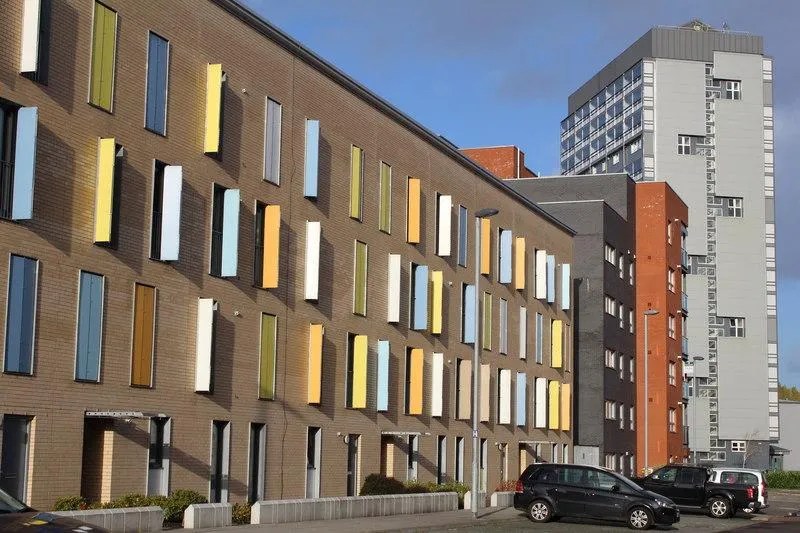

A nondescript government building on the edge of an industrial estate is not the stuff of civic romance. There is no grand municipal frontage and no obvious reason why anyone walking past would think: here is where the state becomes visible as a force for good.
And yet inside, over two days, I met people doing the slow, practical, relational work on which public service depends. The team were proud of the outcomes they were seeing. What I could see was the method: empathy, time, trust and a willingness to understand the person before reaching for the programme.
No speeches, or slogans. or launches. Just the state as a set of people trying to help other people move from one condition to another.
Into work. Maybe.
Into confidence. I hope.
Into enough stability to think about work. Hopefully.
Into a different relationship with their present, perhaps.
Into the possibility of dreaming about a future. Into hope, fully.
Part of what made it striking was how different that felt from the Jobcentre people often imagine, and sometimes experience in reality: a ten-minute appointment to check whether someone has performed enough job search to satisfy the system’s need for reassurance.
There’s a whole politics sitting behind that: the suspicion that people need to be monitored more than understood, that the state’s main task is to distinguish the deserving from the shirking.
Conditionality is not always wrong; a welfare state has rules, and rules matter. But conditionality without relationship becomes a pretty poor account of human being. It turns the appointment into a ritual of suspicion. Have you searched enough? Have you complied enough? Have you performed enough according to our need to satisfy anxiety about scroungers?
If someone’s distance from work is bound up with health, housing, confidence, caring, trauma, debt, skills, transport or fear, then ten minutes is not a relationship. It can’t even qualify as a brief encounter.

The value of the work I saw was not simply that it was face to face. It was that the face-to-face time was being used to build enough trust to understand need, and enough partnership to respond to it. A multi-agency use of time, not a narrow benefits-focused check-in against the state’s suspicion.
This is quiet work taking place across the country with dedicated and passionate people devoting themselves to the service of others. In that respect Laurieston’s jobcentre isn’t particularly special.
But you can’t overlook the backdrop of somewhere with an infamous public story. I don’t know why it is that I ‘knew’ about the Gorbals as a place, but it carried in my mind a bundle of connotations: Victorian slums, post-war clearance, tower block aspiration, failure and deprivation, followed by urban renewal.
What I saw and heard on my two days was not simple in terms of either failure or triumph. It was about the long work of restoration and repair.
Repair at the scale of a neighbourhood is not an intervention. You’re not talking about a carefully managed programme with a neat beginning and end. It is a generation’s worth of decisions about housing, streets, schools, public safety, maintenance of the public realm, memory, pride and whether the community and the people in a place believe there’s a future that includes them.
Whitehall, or Holyrood, or the Senedd, or Stormont, can have a housing policy. A health policy. An employment policy. An education policy. A crime policy. A childcare policy. A loneliness strategy.
A community will experience all of those things in its local way.
That is why local government matters so much. Not because councils are magical. They are not. They can be slow, defensive, underpowered, bureaucratic, maddening and sometimes wrong. But they are one of the few institutions left that are forced to care about the joins between the things.
The point is not that every answer is therefore local. It is that somebody has to care about how national systems land in a real place.
Leaving well, staying differently
And even in Glasgow, where repair felt real and patient, the question of success still felt complicated.
Because it begged the question, when being told that the Jobcentre works with people experiencing high levels of deprivation: what had regeneration changed for the people who stayed, or grew up, or arrived afterwards? Had the lives and opportunities within those places changed as profoundly as the built environment?
That might be unfair. There are many things that matter so much to the quality of life you experience: the built environment, housing, streets, pride, beauty. None of that is superficial when you live in a place.
But the question stayed with me because, for all the best intentions in the world, our public policy imagination is still so often trapped between rescue and exit.
We rescue people when things go wrong.
And then we try to move them on.
There are times when rescue is needed, and times when moving on is the point. If someone is trapped by poor housing, family breakdown, domestic violence, insecure work, debt, addiction, isolation, ill-health, fear, or the hopelessness that comes when several of these things arrive together, then of course public service has to help them get out from under it.
But a place cannot live by rescue and exit alone.
One of the quiet cruelties of talking about places with concentrated need is that success is often imagined as leaving.
The clever child leaves.
The ambitious young person leaves.
The family with the new job leaves.
The person helped into work, confidence or stability leaves.
The place succeeds by exporting its success stories elsewhere, and then the vacancy is filled by someone more vulnerable, more precarious, more in need of the same scaffolding.
Perhaps sometimes that is good. If leaving is a liberation, then leaving is good. There is no virtue in trapping people in a place because other people are romanticising rootedness.
But what would it mean for a place not only to help people leave well, but to help them stay differently?
To grow, earn, serve, build, lead, and still belong?
Not escape, exactly.
Not staying put as a moral achievement.
Something more like rooted velocity.
What would it mean if somewhere wasn’t a place people got out of, but a place they could grow out from?
I was ruminating on this as I travelled back on the train (wistfully imagining the faster HS2 future that will never be realised).
And then later that week it was given another angle by a visit to the Grahame Park estate in North London.
A planned world
There is a particular kind of post-war and 1970s confidence you can still feel in places like Grahame Park, even when the confidence has long since drained away.
The idea wasn’t small. Homes, shops, library, community centre, pub, medical practice all to hand. Forget 15 minute cities, this is a place arranged around its own provision. A planned world. A place that, on paper at least, had the ingredients of everyday life within reach.
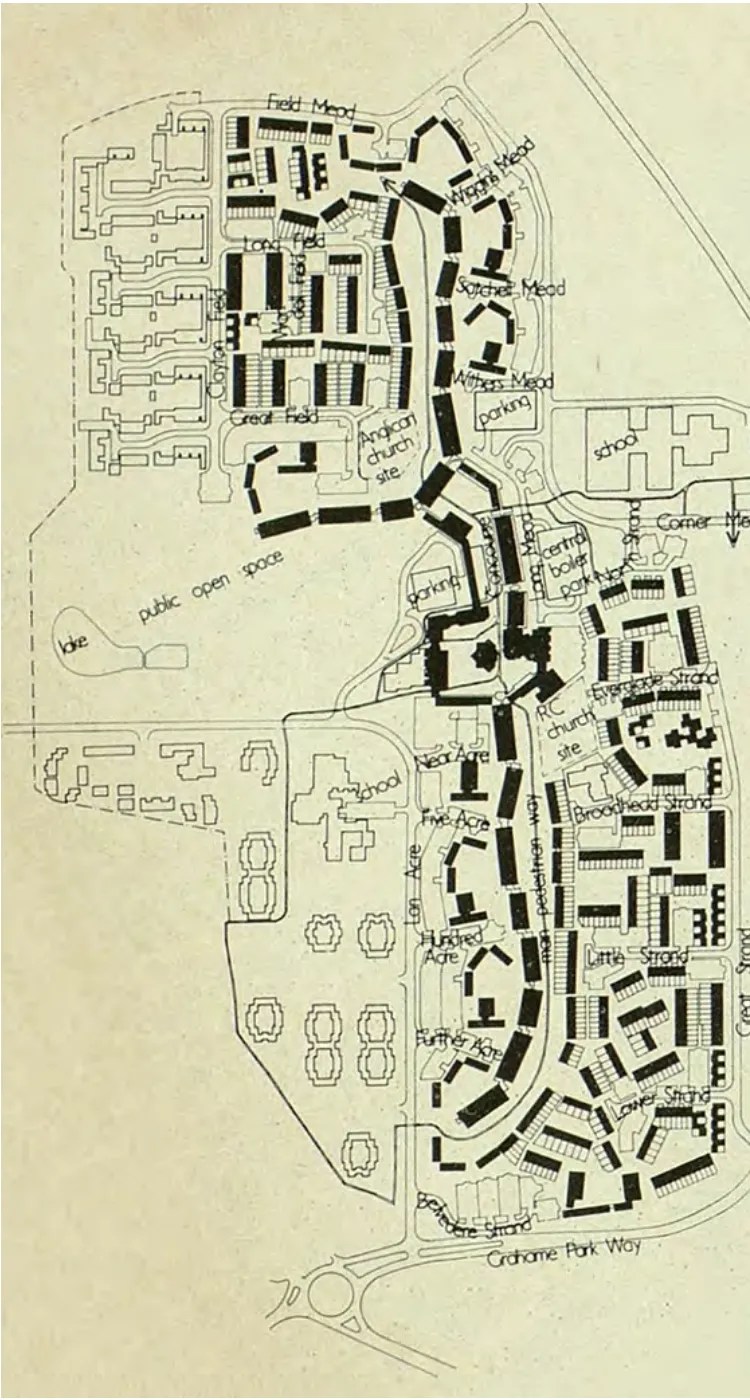
But then you see the present tense of it.
The shops shuttered. The pub long gone. The library now “the old library”. The community infrastructure still there but in a ghostly form where its name records what it used to be.
Across the way you can see the coming future with new housing already built and hoardings declaring a vision of more to come. But the older estate is just waiting, in stages, for the bulldozers.
And yet, in the middle of all of that, life.
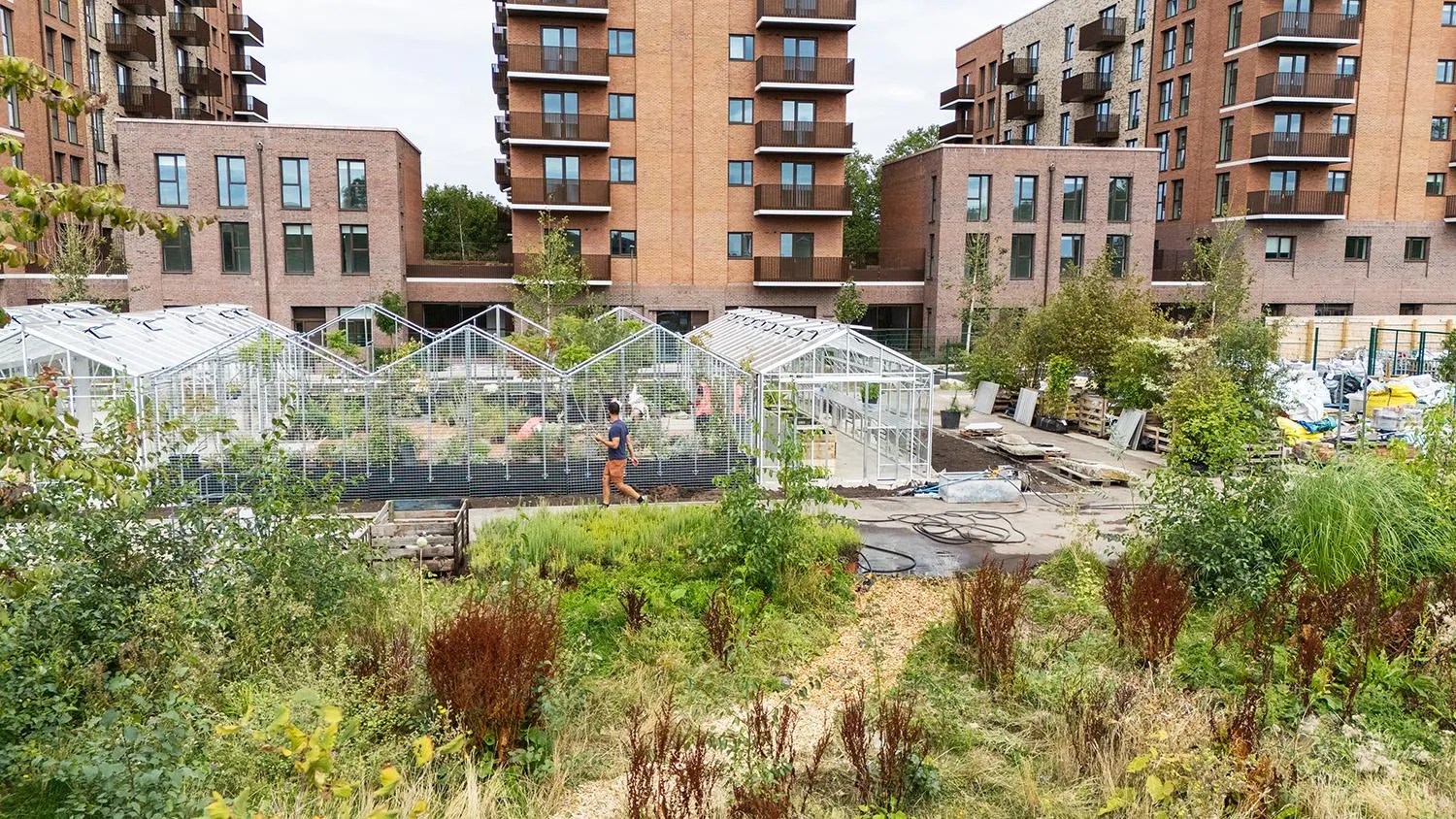
Not sentimental life. Not the kind of Big Society community spirit invoked when we don’t want to fund something properly. Actual, organised, practical, slightly miraculous life.
Notting Hill Genesis making use of what I learned is called ‘meantime space’. A community garden backed by the RHS and UCL. The old library being run by the Colindale Community Trust and creating space for DWP and its partners to operate. Shaw Trust active. The Center of Excellence taking over premises. Housing officers in another unit. Training space in another. A circular upcycling store and workshop. Other units turned over to community and startup use.
People with keys. People with relationships. People who have lived there their whole lives. Other people who grew up there, moved away, but continue to work for its future because the place has not stopped being theirs.
I don’t know whether any of this feels like “the state” to the people who live there. I suspect a lot of it probably does not, and perhaps that’s part of why it works. This isn’t The Government arriving with a backdrop and a brand. But it is public servants and civic servants and local people doing the work of governing in the broadest sense: holding complexity, making connections, keeping rooms open, knowing who to call, helping something happen. These are the epitome of servants giving their full time to governing.
My day on the Grahame Park estate would give even the most hardened cynic the fuzzies about what Britain can be at its best. It was moving to see people refuse to let a place be only its deprivation statistics or its regeneration plan. It was absolutely brilliant to see an estate that is in many ways in limbo, teeming with support, activity, experiment and care.
Not only “come here to receive a service”, but “come here because something might start.”
That is a very different proposition.
It matters that space exists which is not fully commercial, not fully bureaucratic, not fully polished, not fully predetermined. Space with enough structure to be safe and useful, but enough looseness to be generative. Space where someone can be helped, yes, but also where someone can host, volunteer, organise, sell, repair, cook, teach, learn, pray, listen, garden, rehearse, advise, belong.
This is low-risk civic space. Not risk-free, and not without expectations. Just somewhere where the price of trying is not ruin.
Places where ideas can be thrown about before they have to become a business plan. Kitchens where people can cook together. Spaces where someone can host the first session. Gardens where loneliness is not solved but might be interrupted. Desks where a person can be helped to make sense of a form one day, and discover what they always had to offer their neighbours on the next.
It’s that last bit which was really special about the time I spent working on the jobs and careers service. Because there is something quite profound in the shift from being helped to having something to offer. From being a case, or a client, or a claimant, or a customer, or whatever label we give you, to being someone who might make something possible for someone else.
This, I think, is where the language of belonging and beginning starts to overlap.
A somewhere to be is not just a waiting room. It is not just somewhere to be processed. It is not even just somewhere to be welcomed, though being welcomed is no small thing.
A somewhere to be is somewhere that your contribution comes alive.
The affordable mess
And right now Grahame Park is making space for that in all sorts of ways.
But there is a problem.
What I saw that day felt exceptional. Partly because it was brilliant; partly because I haven’t seen many places with anything like that concentration of help and possibility.
Because in raw terms, the density of support per resident must be extraordinary compared with many other places. And the square footage required for all that activity would be astronomically expensive if the place were not, in property terms, on its knees.
The very conditions that are making all this life in the meantime possible are the conditions everyone is trying to overcome.
That is some mismatch.
Some of the most hopeful things I saw were possible because the shiny future had not yet arrived. Regeneration creates meanwhile space and temporary permissions among buildings waiting for their final form. Rebuilding a place creates the need for engagement, mitigation and consultation in the name of community benefit. And in the interim it is creating subsidised possibilities for dead space to be used.
But one day the future is going to arrive.

The bulldozers will roll in. The new units will go up. The hoardings will come down. The new public realm will be photograph perfect. There will be new commercial opportunities, and there will be tasteful new signage. But what happens to the old library, and to all that’s made possible by the otherwise empty units that are no longer there?
It’s highly possible that the affordable messiness of the transition becomes harder to accommodate in the place that transition has created.
This is not a complaint about the people doing the work. Quite the opposite. I met people trying extraordinarily hard to make good places in the face of things that refuse to make goodness easy. Some of them spoke about the difficulty of carrying today’s partnerships into tomorrow’s buildings: whether a future medical centre would have as much room for shared activity, and whether organisations paying little or no rent now could manage the eventual costs. Those were concerns raised in conversation, not conclusions I can draw about what will finally be delivered. The published plans do include new community facilities. All the more reason, perhaps, to ask whether the kind of informal, affordable capacity I saw will survive alongside them.
But the question remains.
What if the things that help a place heal are not incidental to regeneration, but central to it?
What if the cheap room, the community kitchen, the training space, the upcycling workshop, the housing officer nearby, the trusted adviser in the old library, the garden where people gather, the local person who knows everyone, are not temporary mitigations on the way to transformation but part of what transformation actually is?
The danger is that we use civic life to make regeneration bearable, then design final places in which that same civic life cannot afford to remain.
And if we aren’t careful, digital becomes the convenient compensating story again. Fewer rooms. Fewer people. Fewer ongoing costs. But more technology to help you self-serve and never encounter the tangible and human state.
Close the counter, bank the savings, launch a website, call it progress.
First-step spaces
This is where I come back to the high street.
We have tended to treat the high street as a retail problem with some community benefits attached. Get Mary Portas in to fix it. Make the town centre more attractive. Get the business mix right. Sort the parking, the rates, the shopfronts, the footfall.
None of that is irrelevant. But it still starts from the assumption that the high street’s first job is commercial, and that community follows if the commerce works.
What I am trying to get at is almost the reverse: what if we stopped treating its civic life as a fortunate by-product of commerce, and asked what kinds of trade, work and enterprise might grow from a place people actually want to belong to?
And so the question is about what kind of space a society leaves for beginnings.
Who gets space?
Who can afford to try?
Who is allowed to fail without ruin?
Who can use a room for nothing, or nearly nothing, before their idea has proved enough to satisfy a funder, a landlord, a procurement team or a bank?
Who gets to hear the words: “try it here first”?
We can talk about succeeding as though it is mostly a question of personality. Hustle. Drive. Having what it takes.
I used to enjoy watching The Apprentice, a show built on the premise that people might successfully demonstrate their commercial genius by making a few hundred quid from upselling some pasta, or designing an app for dogs, or whatever chaos has been assigned to them that week.
But those tasks are only possible because the contestants are placed inside an incubation chamber. They are not paying the real costs of premises, production, logistics, insurance, access, marketing or professional support. They are given a temporary world in which trying is possible, and then judged as though the only question is whether they have business instinct.

Real life is much less generous.
In real life, the cost of beginning is often the thing that kills the beginning. Not the lack of ideas. Not the lack of gifts. Not the lack of care. It’s the room. The rent. The time. The confidence. The insurance. The transport. The childcare. The equipment.
And this is not only true of enterprise. It is true of work itself, especially for people whose lives are held together by health-related benefits. We sometimes talk as though the question is simply whether work pays.
But for many people the more frightening question is whether trying work is safe.
If the job does not last, if the hours break your health, if the employer is not as flexible as promised, if the commute turns out to be too much, if the whole thing collapses after six weeks, what happens then? Do you simply return to the little stability you had, or have you fundamentally disturbed the machinery that was keeping you just about afloat?
A state that wants people to try work needs to think as hard about what happens if the attempt fails as about what happens if it succeeds. It has to make trying less dangerous.
I like the language of “third space” and we definitely need more of them. But while it feels useful, I’m not sure it’s quite enough. We do need places that are not home and not work, where people can meet without every interaction being commercialised or professionalised.
But the spaces I saw in Grahame Park were not only third spaces. They are first-step spaces. Incubation spaces. Places where the next thing becomes thinkable.
A person might arrive because they need something: advice, food, company, help with a form, a warm room or simply somebody who notices whether they are there. Then perhaps they come back for an activity. Then perhaps they volunteer. Then perhaps they run something. Then perhaps they become, for someone else, the person who says, “Come in.” There is no tidy sequence and no required destination.
Nor do they have to tell the whole story at the door. A place like this can come to know somebody gradually: through what they return for, what they try, what helps, what does not, and what they become ready to say. The beginning is not an assessment event. It unfolds.
That is more human than a service journey and much less tidy.
It does not fit neatly into the logic of completion rates, though completion may happen.
It does not reduce demand, though it might.
It does not build skills, though skills are built.
It does not need to promise improved wellbeing to make a good case for itself, though perhaps it will improve that too.
It changes the direction of a person’s relationship with the place. They are no longer only a recipient. They become part of the answer.
So reflecting on what I wrote last year I think I had massively underplayed this. I had conceived of GOV.UK on the High Street mostly as a destination for doing the transactional. But I think that’s missing something. It can’t just be an in-person route when a digital route fails. It isn’t just assisted digital in a shop. It cannot just be a desk, a screen and an adviser, valuable though all of that would be.
I think we need to be thinking about this as part of a wider civic ecology. One of the comments on my post used the phrase ‘proper plan’ in the context of connecting to health. It doesn’t have to be a building called ‘GOV.UK on the High Street’ but it is about how local government and housing associations and charities and schools and libraries and faith groups and employers and community organisations make it easier for good things to start.
Presence is not only about intervention. It is also about incubation.
Digital can be part of helping people begin. But it cannot be the whole of the place in which a beginning happens.
And trust is not rebuilt by telling people the state is competent. It is rebuilt when people experience institutions making good things possible in their lives and neighbourhoods. Not once, not as a pilot, not as a press release, but steadily enough that the possibility becomes part of the place.
This is the kind of social infrastructure that looks inefficient only if you have never needed it.
Under our noses, in the air around us, and in the room down the road
Which brings me back to infrastructure.
Some infrastructure has an entrance: the library, the school, the park, the housing office, the community hub, the health centre, the bus that gets you there and the crossing that makes the journey safe.
Some of it sits in the air or beneath the floorboards: Wi-Fi, APIs, registers, identity, payments, appointments, consent, case notes that follow the person rather than the organisation. The quiet civic plumbing that means somebody does not have to tell the same crisis to five arms of the same state.
And some infrastructure is social.
The person with the key. The volunteer who knows the family. The council officer who can convene the right people. The youth worker who hears the thing that was not said. The librarian who can help with the form without making anyone feel small. The housing officer who understands that the damp wall, the school absence, the asthma, the debt and the missed appointment are not five separate lives.
Good government needs all three.
The trick is the join.
That was the argument beneath my earlier posts, I think. Though I can see it more clearly now. It is not enough to have a brilliant website. It is not enough to have an app. It is not enough to have AI agents hovering over the complexity with plausible confidence. It is not enough to have a hub if the hub is disconnected from the systems that actually decide things. It is not enough to have local warmth without national plumbing, or national platforms without local trust.
That is why I still think the metaphor of GOV.UK on the High Street is useful. The point is not to roll out a single branded shopfront everywhere, or to create hundreds of disconnected local versions of the same capability. The point is to ask what common infrastructure for public presence would look like.
What would the centre provide if it understood itself as national grid, not interior designer?
What should it make reliably true everywhere?
What could local government host, adapt and join up if it were properly resourced?
What could nearby institutions do if their proximity were treated as essential capacity?
What would a high street look like if it were not only a place to consume, but a place to be?
What would it be if that place to be became a place to belong?
And what would it take for belonging to become beginning?
Can these bones live?
There is also, for me, a deeper reason why this gets under my skin.
Years ago, a day spent at Old Trafford for the Socitm conference prompted me to write about Ezekiel’s valley of dry bones in a post called Can these bones live?. Back then I was worrying about the future of local government and whether institutions that looked exhausted might yet find new life. I’m struck, remembering it now, by how much of the question has stayed with me, even as what I mean by restoration has changed. It is one of those passages that can become too familiar if you’re not careful: the bones are very dry. The prophet speaks. The bones come together. Breath enters them. They live and stand on their feet.
It is a vision of impossible restoration, but not a vague one.
It is not a motivational poster about resilience.
It is not “believe in yourself”.
It is not the triumph of optimism over evidence.
The bones are dry. The loss is real. The valley is full. The question is asked honestly: can these bones live?
That question hangs over plenty of places in Britain right now. Can these high streets and estates live? Can these hollowed-out civic institutions live? Can these councils live? Can these neighbourhoods, so often used as backdrops for someone else’s policy argument, live?
The answer, in Ezekiel, doesn’t begin with a strategy. It begins with speech and breath. It starts with the disembodied substance of life but it doesn’t stay disembodied. The bones come together. Sinews and flesh appear. The body is reconstituted. Life is spiritual, but it is not abstract.
Whether or not you’re on board with the theology of the passage and what it says about God’s faithfulness I think these principles are important. Restoration needs rooms, staff, budgets, systems, maintenance and people with keys. A common life cannot be sustained by good intentions floating a few inches above the ground.
Christian reflection on government can go in some strange directions. There is the hunger for power dressed up as Christian nationalism; there is an account of authority that leaves too little room for challenge; and there is a suspicion, familiar in other Christian traditions, that the state can only ever be Babylon.
I have a different view that is rooted in the idea of kingdom democracy. There are lots of bits of the Bible that inform that but I particularly enjoy Romans 13:6: This is also why you pay taxes, for the authorities are God’s servants, who give their full time to governing.
That is a remarkable phrase, even allowing for all the necessary caution with which Christians should read any text about earthly power. Taxes are not only extraction. At their best, they resource people giving their full time to governing. And governing is work.
Public administration is work. Justice, order, welfare, maintenance, planning, repair, stewardship, inspection, convening, safeguarding, licensing, listening, deciding: these are not accidental activities. They are work to which God’s servants are devoting themselves.
And work needs resourcing.
This is part of what I’m exploring through Common Good: a more prayerful, grateful, serious account of public life. Not because the state is always good or public servants are always saints. They plainly are not.
But because contempt for government has become too easy, too lazy, too spiritually corrosive. We notice the failure and forget all the many ways, big and small, that government succeeds; roads, schools, vaccinations, social workers, judges, bin crews, teaching assistants, flood defences, librarians, food safety inspectors, the quiet prevention of worse things.
We forget that the state, at its best, is one of the ways a society chooses not to abandon people to market, family, luck or loneliness alone.
That is not an argument for statism. It is an argument for gratitude, and for scrutiny, and for resourcing the work we ask people to do: the capacity to act, keep a room open, maintain a park, employ the person who knows how the systems join, and stay when the private sector leaves.
Presence as a promise
So at last, here is where the Bluesky thread, the local elections, GOV.UK, Barnet, Glasgow, Wifi, Common Good and Ezekiel all meet. It’s been a roundabout route but hopefully I haven’t lost you on the way.
The state has become too abstract for too many people.
Sometimes that abstraction is digital. Sometimes it is economic, institutional or geographic. Sometimes it is spiritual: a loss of any shared sense that governing is a vocation ordered towards the common good rather than a grim contest over scarce resources and mutual resentment.
The answer is not to pretend the past was uniformly better. It was not. Nor is it to abandon digital government, which remains one of the best ways of making the state more usable, more coherent and less needlessly cruel.
The answer is to make digital part of presence, not a substitute for it.
Digital identity can be part of presence if it helps the person at the desk see what they need to see. An app can be part of presence if it helps someone book the appointment, understand their entitlement or carry their story with them. AI can be part of presence as it helps someone navigate complexity. Wi-Fi can be part of presence if it opens up access. Shared data can be part of presence if it stops people having to narrate their crisis five times to five strangers.
But ultimately presence relies on bodies and bones, rooms and roots.
It needs the state to be findable and local government to have the capacity to act. It needs civic partners to be trusted, and places where not every square foot has to justify itself through commercial rent. It needs hubs that people can grow out of, not merely be processed through. It needs a centre willing to make some things common, to make good things easier, and then to leave room for places and people to do something with them.
And it needs us, perhaps especially those of us who pray, to recover a more generous imagination for what governing is for.
Because when life gets hard, people need more than a website. They need more than a slogan. They need more than a promising pilot with a ministerial visit and a sunset clause.
They need somewhere to go.
They need somewhere to be.
They need somewhere to belong.
And, just as importantly, they need somewhere to begin.