Earlier this week I was having a conversation about data centres, AI, and the fairly febrile state of mind surrounding both of them at the moment.
There are sensible arguments to have about where data centres go, what they require and who benefits from them. There are even bigger arguments about what AI might do to work, to public services and to the institutions we rely on. But both also seem to have become lightning rods for a wider uncertainty about where all this is heading, who is in control of it, and whether the people making the decisions can be trusted to make them well.
And in the course of the conversation, my colleague Barbara asked whether I’d had a look at the most recent OECD work on public trust.
I hadn’t. Which was a surprise given that public trust is something I come back to quite often.
And yet, despite that, I’d completely missed the fact that the OECD’s latest edition had come out. I hadn’t seen anyone give it much coverage either. Maybe it simply passed me by over the summer.
But I think back to the 2024 edition, which also seemed to pass without much comment, and I think public trust is hugely underweighted in the way we talk and think about the challenges facing the UK and elsewhere. If I’d been in any of the conversations about the missions (RIP?), I would have called rebuilding public trust one of them. Not because trust is an end in itself, or because everybody ought to agree with government, but because as we’ve seen, it’s hard to do very much that is difficult, disruptive or long term if large numbers of people start from the assumption that government is incompetent, dishonest, unfair, uninterested in them, or some combination of the four.
AI is already a trust question
Anyway, back to the trust survey. For the first time, the OECD asked people what they expect if government agencies use AI. The British results do not say that people are simply against it.
They are more uncertain than that. 39% are confident AI would produce more tailored services and 36% that it would reduce government costs. When the questions turn to protecting personal information, keeping humans in control of important decisions, transparency and fair treatment, confidence sits between 31% and 35%.
But on all six measures Britain is less positive than the OECD average.1
On Thursday 9th July 2026 I sat in the audience for the launch of Mind’s Mental Health in the Age of AI Commission. Here are some thoughts provoked by that evening.
On the face of it, “AI and mental health” sounds like it fits neatly around a panel and a commission. In practice, it spills out of health care into a messy overlap of consumer protection, online safety, public-service design, and the raw capacity of health services. The tidy categories of policy do not hold up particularly well against the lives people actually live.
After the panel I joined a breakout group focused on regulation. The conversation flowed well and we discussed the Online Safety Act and the boundary of responsibility between users and systems; where the MHRA’s role starts and stops; how to restrain actors who have no intention of behaving well, and what to do about those who say the right things while taking unacceptable risks.
And one conclusion seems hard to avoid: AI is already part of our mental health ecosystem, whether or not the tools being used describe themselves that way.
It fills the gaps left by waiting lists. Someone might use it to prepare for a GP appointment. A conversation about employment might be rooted in the ways their mental health is a work-limiting condition. Someone who doesn’t think they’re ill enough to ask for help, is too ashamed to ask, or has asked before and had a bad experience, might well be typing instead.
So arguments about whether people should use AI for mental health are largely academic. The reality has outpaced them: people are using it.
The harder question is what happens when that use takes place through tools and services that do not think of themselves as mental health services at all. Because “AI” isn’t one thing. It ranges from regulated clinical technologies and purpose built tools to general purpose chatbots and AI embedded in services designed for something else. Their risks are not identical, but people move between them far more easily and quickly than regulation does.
Mind’s Commission begins in that blurred reality, asking how AI is changing help-seeking and support pathways, how people can be kept safe, and what it means for inequality in access and experience.
The European Commission’s Joint Research Centre (JRC) is currently doing a piece of work to develop an omnichannel framework for public services across the EU. A week ago I joined a workshop alongside people from the OECD, Portugal, Sweden and Denmark.
Omni-channel refers to the approach to managing service delivery channels in an integrated, interoperable way to enable users to access the service they want seamlessly and with consistent quality across channels (such as websites, physical offices, self-service kiosks, video-calls, call centres, etc.), as opposed to a ‘multi-channel’ approach that refers to the ability of the user to access services through different entry points, often operating independently of each other.
OECD Recommendation on Human Centred Public Administrative Services (2024)
Now, through my work with DWP on the jobs and careers service, it’s great to be revisiting those ideas afresh, and in concrete terms. Part of our vision is to design a service that is ‘digital where possible; human when needed’. As an organisation with a national footprint of Jobcentres and a wide range of services that can (and should) be delivered online, we’re asking: how can we bring the best of in-person services into people’s palms and pockets, while at the same time bringing the best of digital into those frontline conversations for both staff and our users?
From tailored CV advice online, to guidance offered face-to-face, to the potential of personalised prompts and nudges through an agentic interface in the future, our aim is to meet people where they are, in the mode that works for them.. And for that, we need to be focused and ambitious in pursuing an omni-channel approach.
All of which is to say: thoughts, I’ve got a few. I wanted to write up the post it notes I stuck on the Miro board – it’s not a formal report, just an open reflection. If you’d been in that call, here’s what you’d have heard me say – but what would you have added (or objected to)?
It was our first week back for Vineyard English School after the summer break1. Many familiar faces were absent, but one young Eritrean was eager to see us – he’d just received a letter about his asylum claim.
We were back in the hotel today after stopping over the summer (more volunteers would allow for doing this year round). Here's a photo of a letter that had been received by one of the hotel residents. Two native English speakers had to check with one another that we actually understood it.
The letter was dense, bureaucratic, and impenetrable. It’s a far cry from the aspirations for content design that so many advocate for as a central plank in reimagining the relationship between the state and its users.
He looked to us for an explanation. But even among the fluent English speakers, we had to consult amongst ourselves to ensure we understood it correctly. Hardly surprising, since according to The First Word’s readability test, this letter is on par with reading Nietzsche.
If those acronyms mean nothing to you then this blog post is not for you. It’s written in response to the news that the Government Digital Service (GDS) and the Central Digital and Data Office (CDDO), and the Incubator for Artificial Intelligence (i.AI) are moving from the Cabinet Office to the Department for Science, Innovation and Technology (DSIT) under the responsibility of Peter Kyle as the responsible minister.
At the OECD one of the things we would emphasise was the importance of a mandate and authority for providing leadership of digital government across the entire public sector. GDS was the poster child for this idea. Many countries have established their own Digital Government Units similarly located at the centre of government and operating in proximity to the country’s political leadership. In more than one country the digital function has been given even more prominence and made an extension of the President or the Prime Minister. This has been critical in ensuring that the agenda receives support at the highest levels and made a priority.
In the UK, GDS benefitted from Francis Maude as the Minister for Cabinet Office (MCO) with his leadership backing the wave of transformation through to 2015. Under his watch many of the things that established the culture for digital transformation bedded in. And then in 2015 there started a sequence of 12 MCOs in 9 years. Not many of them showed the same aptitude for leading digital transformation as Maude.
Along the way the clarity of responsibility for digital started to fray. Digital inclusion, some aspects of data, some parts of Artificial Intelligence, and some parts of digital identity moving over to what is now DSIT.
At the start of June, James Plunkett wrote a piece called The oddness of the political moment. It is amazing just quite how quickly the atmosphere has changed since the election (I’d attribute a lot of how I feel myself to having prayed through Croydon and then for all 650 MPs in the last week) but the post remains very timely and insightful.
I left a couple of comments around accountability. One on the accountability of those elected to serve, and the other about GOV.UK and the policymaking process. David Durant said one needed to be a blog post, but I’ve done both.
“…it seems increasingly clear we need people whose day job it is to care about the infrastructure that underpins accountability and the associated discourse…”
When I decided to leave the OECD, a major factor was the stark disconnect between its stated mission of ‘better policies for better lives’ and the practical reality that means the organisation has to prioritise diplomatic niceties over accountability. I accept that my expectations are perhaps unreasonable. After all, the OECD isn’t an organisation designed, set up or mandated to provide accountability when a member mis-steps. However, you can’t have a ‘rules based international order’ if there’s no accountability against those rules.
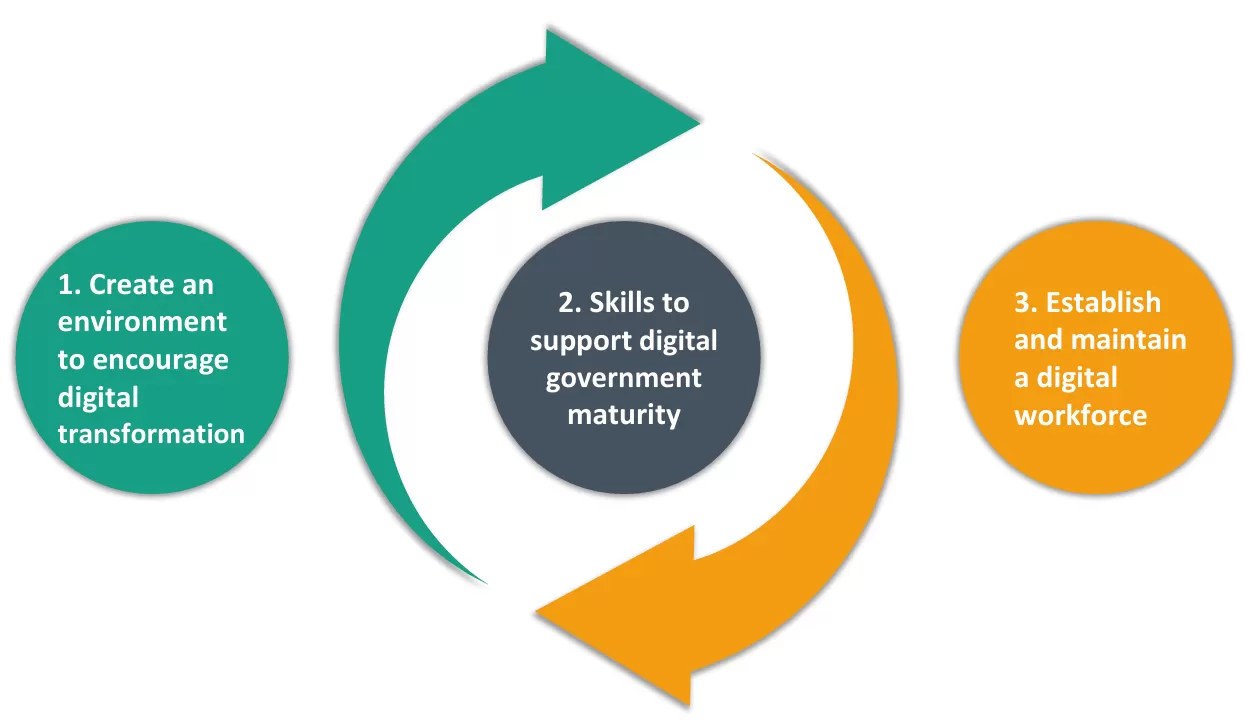
Too often, digital is treated as a specialist brick laid by others. But real transformation happens when digital becomes the mortar and binds teams, cultures, and missions together. This framework argues that while investment in digital, data and technology professions and leadership are essentials, the key to unlocking sustainable, whole of government transformation is making digital everyone’s business.
This framework emerged from work led by the OECD’s Digital Government and Data Unit. I had the privilege of co-authoring the paper alongside Lucia Chauvet, supported by the Working Party of Senior Digital Government Officials (E-Leaders) and its Thematic Group on Digital Talent and Skills. It builds on years of OECD collaboration in this space — drawing lessons from country reviews, global case studies, and shared experience from digital leaders across the world.
Since publication, the framework has been embedded in OECD Digital Government Reviews and country support work. It’s designed to be actionable — not just a diagnostic tool, but a map for reform.
One example: we used it as the basis for work with the Government of Tunisia, which led to a resource called Understanding Digital Government — a companion website (formerly at understanding-digital-government.com) in French and Arabic. We worked with Public Digital to design a set of training materials that would help public servants engage with and learn about the five digital government user skills. Sadly, that site is no longer live. I had always hoped we’d be able to translate those materials into every OECD language, but like many good ideas, that ambition outpaced our capacity.
We also used that Tunisian project as an opportunity to work with the School of Good Services to provide training to the most senior decision makers across the Tunisian local government sector.
Digital, data and technology are transforming how we live, and also how we work. This is as true in the public sector as anywhere else.
Governments that want to deliver in a digital world need more than just technical upgrades; they need capable, confident, and collaborative teams. That means:
Creating a working environment that encourages transformation,
Defining and nurturing the skills that matter,
And building the systems to attract, grow, and retain a digital-capable public workforce.
This paper presents the OECD’s framework for digital talent and skills, structured around those three imperatives, each grounded in real-world examples and practices from member and partner countries.
The Three Pillars of the Framework
Pillar 1: Create an environment to encourage digital transformation
Governments need more than strategies — they need workplaces where digital ways of working can thrive. That means:
Digital leadership that’s visible, user-centred, and empowering;
Organisational structures that enable multidisciplinary work and reduce hierarchy;
A learning culture where experimentation is safe and valued;
Tools and ways of working that support agility and delivery.
Pillar 2: Skills to support digital government maturity
Skills aren’t just about technical roles. The framework identifies that countries need to be mindful about the foundational “21st century skills” needed across society for people to thrive in the digital era and then identifies four categories of capability that rest on top:
User skills — digital basics for every public servant
Professional skills — the know-how for delivering digital services
Leadership skills — the ability to model and enable transformation
Each of those areas covers the detail needed to achieve a long-lasting and sustainable transformation and is grounded on raised expectations for all members of society and providing them with levels of digital competency that mean they fully thrive in our Internet-enabled world.
This has implications for government. And a critical observation in the framework is that digital government should not solely be the preserve of those in the digital, data and technology professions. Central to the framework is an expectation that governments should pursue a new baseline expectation for public sector workers to acquire a grounding in five core skills:
Recognising the potential of digital for transformation1
Pillar 3: Establish and maintain a digital workforce
It isn’t possible for governments to click their fingers and swap their existing workforce for a ‘digital’ one. And nor should they want to.
The answer to digital transformation is about having a workforce that is digital. There are important professions and career paths that need to be established but more importantly is creating an ongoing process that can enhance and equip everyone in the public sector to contribute to digital transformation.
This pillar focuses on how governments can:
Attract digital talent through flexible recruitment and employer branding;
Retain people by investing in culture, career progression, and equity;
Support growth through structured development, mentoring, and learning opportunities;
Build the systems to allocate skills effectively across teams and priorities.
The blurb
The rapid pace of technological advance and associated potential for the use of data have not only changed the way people live but also the way people work. This digital disruption hits all sectors, including the public sector, and this working paper emphasises pathways for developing a public sector workforce with the necessary skills to achieve successful digital transformation. It presents the OECD Framework for Digital Talent and Skills in the Public Sector, which highlights the need to create the right working environment, secure the right skills, and evolve the right workforce to support a progression from e-government to digital government.
When a public servant recognises the potential for digital transformation they: * identify, describe and analyse practical examples of digital transformation; * look at the status quo of existing processes and identify opportunities for digital transformation; * have a growing network of digital government practitioners to turn to for advice and challenge; * understand, and can challenge, whether new activity involving technology is consistent with wider strategic activity; * oversee and develop new digital, data or technology activity in ways that complement broader strategic activities * can ask relevant, informed, and challenging questions when they have oversight responsibility for digital, data and technology activity ↩︎
When a public servant understands users and their needs they: * champion and explain the value of user research and participate as part of user research exercises; * can identify the users affected by their area of work, and define the user needs their work meets; * can identify where their work interacts with, receives from, or hands off, to another part of government and recognises the importance of an end to end understanding of the user’s journey; * recognise the different channels and modalities involved in the provision of a service and can map the user’s journey, including associated internal steps; * understand the importance of tackling the digital divide and the priority, roadmap and strategy for accessibility, national connectivity and increasing 21st century skills in society ↩︎
When a public servant collaborates openly for iterative delivery they: * can explain the benefits of ‘working in the open’ and argue positively for an open by default approach * can implement participatory approaches to their area of work to genuinely include their users * understand the value of diverse, multi-disciplinary teams and expect to involve policy, delivery and operational colleagues to ensure a fully-rounded perspective on any given topic * can explain the benefits of an iterative approach to delivery * understand different phases of delivery (e.g., Discovery, Alpha, Beta, Live) and are clear about the benefits of researching, prototyping, testing and learning on an ongoing basis; * have an understanding of open source code and the community-based processes that support them * know where to find, and appraise, the suitability of common standards, components and patterns ↩︎
When a public servant is trustworthy in their use of data and technology they: * understand their responsibilities in the workplace around information security and data handling or processing * are confident in terms of digital security and clear about password policies * understand the legal requirements on them as individuals in terms of their handling of data to protect the privacy of citizens * are comfortable considering the ethical dimensions associated with the use of digital technologies or data, including knowledge of any relevant instruments such as Good Practice Principles * understand the support and activities associated with maintaining a reliable service * ensure that contracts with third party suppliers are consistent with the digital government agenda ↩︎
When a public servant knows about data-driven government they: * are aware of the individuals or organisations that are responsible for the data agenda * understand the priority, roadmap and strategy for taking the steps to establish a data-driven public sector * are familiar with the governance arrangements for access to and sharing of data * are confident in their legal and ethical obligations for the treatment of data * recognise opportunities for how interoperability, the Once Only Principle and access to transactional data can support the better design of services * adopt an empirical approach to the use of data for generating public value in terms of Anticipating and planning, Delivery, and Evaluation and Monitoring * understand the value of Open Government Data to government, and the wider ecosystem. ↩︎
I really enjoyed a lot of what was involved in this piece of work. It was great to work with the colleagues in Chile (including Felipe González-Zapatawho started the project on the Chilean side and who had become a team mate on the OECD side before we came to finalise the publication) and to have a brilliant peer team of Ignacia Orellana, a service designer from GDS in the UK (but a Chilean herself), Paulo Value from AMA in Portugal, and Pedro Farias from the Inter-American Development Bank.
The experience in Chile gave a fascinating opportunity to get under the skin of what it looks like to think about blending in-person user experiences with a digital-first mindset. The ambition for ChileAtiende to create a seamless experience of government has such familiar echoes of the aspiration associated with GOV.UK but applying it to the built environment, and imagining what ‘government on the High Street’ could look like, is a completely different kettle of fish.
As well as considering the particular needs of Chile, this piece of work has been so helpful in our thinking about a Framework for Service Design and Delivery. The Framework, as described here, went on to become a staple of Digital Government Reviews.
What’s the TL;DR?
This report considers the intersection of Chile’s digital, telephone and physical service channels, and identifies the importance of ensuring the same service experience for all users, in all contexts, through all channels. To make the physical, offline and digital elements of a service work together in meeting user needs, service design is critical. It provides the basis for service delivery and the resulting experience for the public by:
understanding a user’s journey from their first attempt at solving a problem, through to final resolution (from end to end),
addressing citizen-facing experiences and back-office processes as a single continuum rather than two separate models (from external to internal, and vice versa), and
creating consistency of access and experience across and among all channels (omni-channel).
We establish a three part conceptual framework for thinking about service design and delivery that underpins the analysis of Chile and ChileAtiende:
Part 1. The context for service design and delivery: these include a country’s representative and organisational politics, any historic channel strategies, the legacy of technology and infrastructure and finally, society and geography
Part 2. The philosophy of service design: expressed through six critical ways of working covering political, organisational and external leadership and vision; the understanding of whole problems; the design of the end to end service experience; involving the public; combining policy, delivery and operations to work across organisational boundaries; and taking an agile approach
Part 3. The practical enablers for service design: following from the Digital Government Policy Framework‘s “Government as a Platform” pillar, these enablers include sharing best practices and guidelines; governance, spending and assurance; digital inclusion; common components and tools (such as digital identity, notifications and payments); data governance and its application for public value; and public sector talent and capabilities.
Define a clear cross-government strategy and coherent action plan for the government of Chile to establish and nurture a design culture that places users at its heart, in order to respond to their needs across all channels and throughout the policy and delivery lifecycle.
Enable Chilean public sector organisations to understand the needs of the public in order to be proactive in finding solutions to the problems that cause the most pain and the highest costs.
Ensure a joined-up and simple-to-navigate experience of government with brand clarity for all interactions between government and its stakeholders, whether citizen, business or visitor.
Commit to an inclusive experience of government services that builds on Chile’s expertise in offline service provision to ensure those services are understood:
from when someone first attempts to solve a problem through to its resolution (from end to end)
on a continuum between citizen experience and back-office process (external to internal)
across any and all of the channels involved (omni-channel).
Secure cross-government political and administrative support for a holistic service design and delivery agenda ensuring ‘Government as a Platform’ enablers to scale transformation from the most high profile through to the ‘long tail’ of government services, including:
a clear data strategy
guiding principles and guidelines
the necessary human capital
technical and practical support to common components such as digital identity and payments
Establish clear organisational responsibilities to provide coherent governance and effective leadership between:
the Ministry General Secretariat of the Presidency (Ministerio Secretaría General de la Presidencia, MINSEGPRES) and its Digital Government Division and LabGob (Laboratorio de Gobierno),
the Ministry of Finance (Ministerio de Hacienda) and its Modernisation Secretariat,
the Social Security Institute (Instituto de Previsión Social, IPS) and ChileAtiende, and
the Civil Service.
The Blurb
The e-government era saw efforts to move government services online, automate internal processes and reduce administrative overheads for the public. Often technology led, those efforts sometimes led to the exclusion of some users and created digital-by-default siloes rather than coherent, cross-government, omni-channel services. Now, with the move toward digital government, OECD countries are giving greater priority to how services are designed and delivered, to ensure that digital progress benefits everyone, including those who rely on face-to-face interactions.
This report presents a conceptual model for service design and delivery that challenges governments to develop a design-led culture and ensure access to the enabling tools and resources necessary to deliver services that improve outcomes, efficiency, satisfaction and well-being. This model is used to analyse the situation in Chile and provide recommendations about how the ChileAtiende service delivery network can bring the state closer to citizens through a simpler, more efficient and transparent approach. By considering the intersection of digital, telephone and physical service channels, it recommends digital government approaches that ensure consistently high-quality service experiences for all users, in all contexts, and through all channels.
Some recent AI headlines are genuinely frightening. But the questions AI raises go much further than whether one extinction forecast is right. What does Christianity give us for thinking about human dignity, embodiment, relationships, power, responsibility, formation and hope in an age of increasingly capable machines?
Britain still has a serious trust problem. But the OECD’s 2026 survey makes it much harder to treat public trust as one national score: institutions, experiences and demographic groups are moving in different directions.
Robert Jenrick calls excessive compassion “suicidal empathy”. But what happens if we turn the accusation towards Jesus: his costly nearness, outrageous grace, Cross and resurrection?
Burnham has a theory of political power and is making deliberate moves to strengthen the centre. But it seems much clearer about where power should sit than about how the state beneath it should operate.
To provide the best experiences, we use technologies like cookies to store and/or access device information. Consenting to these technologies will allow us to process data such as browsing behavior or unique IDs on this site. Not consenting or withdrawing consent, may adversely affect certain features and functions.
Functional
Always active
The technical storage or access is strictly necessary for the legitimate purpose of enabling the use of a specific service explicitly requested by the subscriber or user, or for the sole purpose of carrying out the transmission of a communication over an electronic communications network.
Preferences
The technical storage or access is necessary for the legitimate purpose of storing preferences that are not requested by the subscriber or user.
Statistics
The technical storage or access that is used exclusively for statistical purposes.The technical storage or access that is used exclusively for anonymous statistical purposes. Without a subpoena, voluntary compliance on the part of your Internet Service Provider, or additional records from a third party, information stored or retrieved for this purpose alone cannot usually be used to identify you.
Marketing
The technical storage or access is required to create user profiles to send advertising, or to track the user on a website or across several websites for similar marketing purposes.